

Feed
Place the grains in fresh organic milk and cover the jar with a breathable cloth.
 Start
StartEvery Tibetan kefir grain started with someone sharing a living culture. Today, yours continues the journey.
What are Tibetan kefir grains?
Tibetan kefir grains are soft, creamy clusters used to ferment milk into a tangy, naturally cultured drink. These grains are fed with organic milk, not manufactured in a factory. They grow through care, time, and sharing.
Each spoonful carries the practical knowledge of kitchens, families, and makers who kept the culture alive by passing it on.
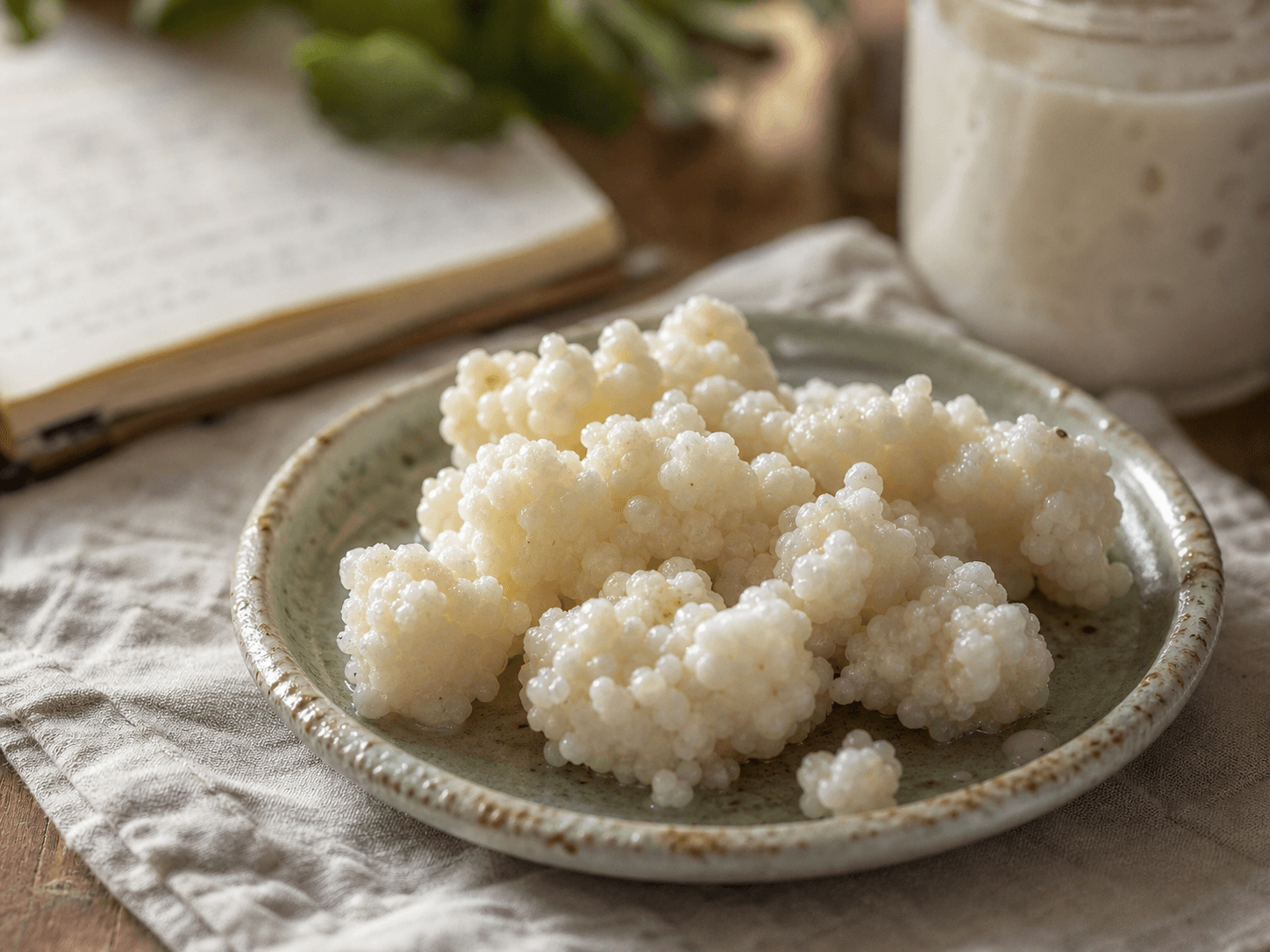
How it works
Place the grains in fresh organic milk and cover the jar with a breathable cloth.
Leave the jar at room temperature while the culture slowly transforms the organic milk.
Strain, drink, cook, or share. Then begin again with the same living grains.
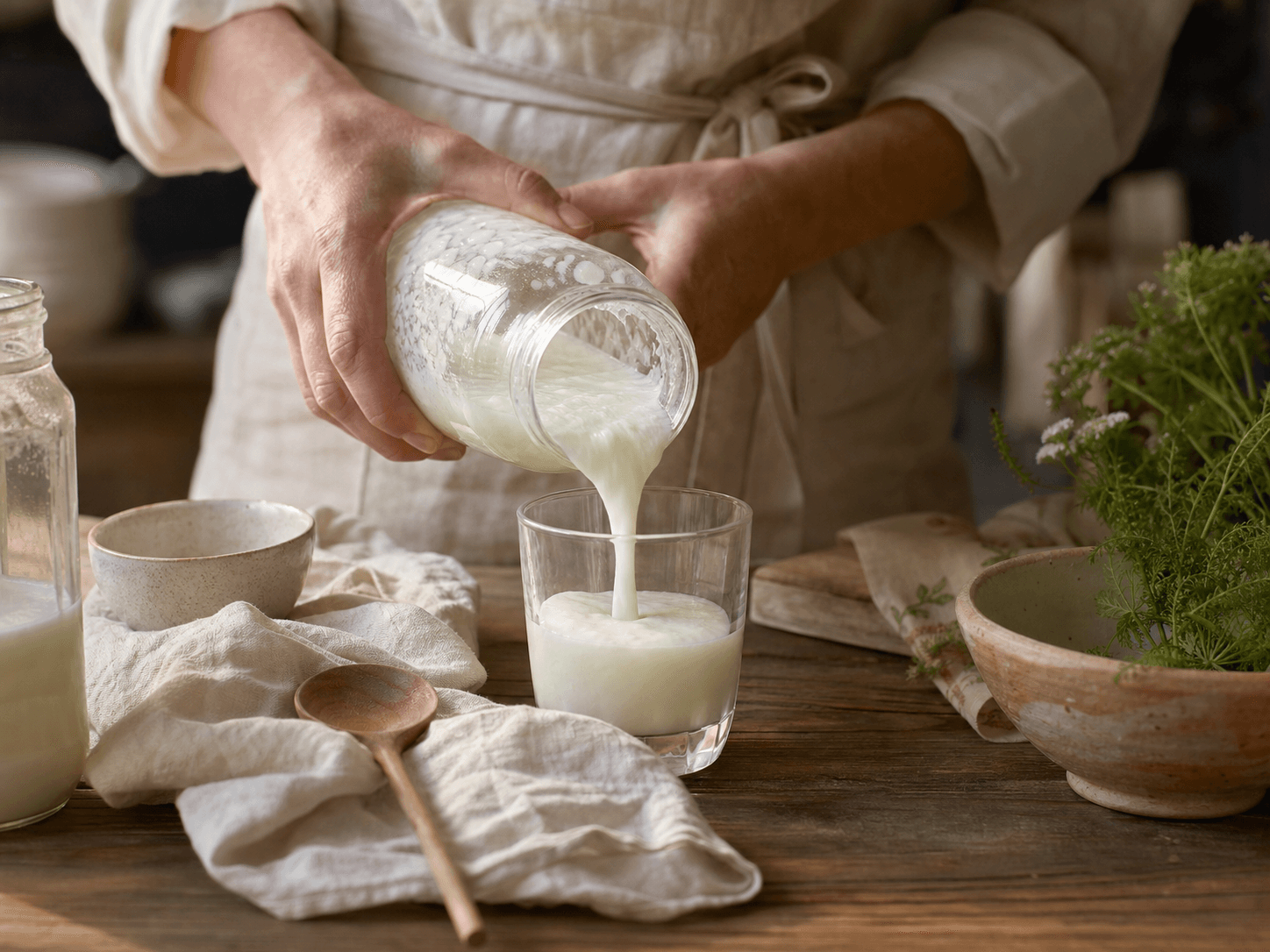
Why people love kefir
People often come for digestion, flavour, and curiosity. They stay because kefir becomes a quiet kitchen ritual: strain, taste, feed, leave it to the morning light.
Start your culture
A small portion of active grains is packed simply and sent with friendly care notes. They are made and maintained with organic milk, in small batches, when enough grains are ready to share.
If you would like to order a grzybek, please get in touch first to check availability.
UK-based, small batch, organic milk, live culture

Recipes and guides
Stories from other makers
“It felt less like buying something and more like being trusted with a tiny tradition.”
“The grains settled into our morning rhythm. My children call it the jar that wakes up.”
“I sent some on to my sister two weeks later. That was the loveliest part.”
FAQ
Yes. They are living cultures made of yeasts and bacteria held in a soft grain-like structure. With regular organic milk and care, they keep growing.
Most grains begin fermenting after a short settling-in period. The first batches can be lighter while the culture adjusts to your kitchen.
No. A clean glass jar, a breathable cover, a sieve, organic milk, and a little patience are enough.
Please do. Sharing is the heart of this project. When your grains grow, you can pass a spoonful on.